
Lots of questions arise when you build a new home. Here we answer some of the most common ones. If you have a question that isn’t answered below, please contact us and we’ll be happy to help!
.png)
Volume builders are a fabulous choice for the overwhelmed, the on-a-budget, the investors, the first homebuyers, the upsizers and downsizers- what we’re saying is, volume builders are a great choice for every buyer.
Volume builders buy their materials in bulk, meaning they can manage to create more affordably priced homes- ideal for today's buyers. Their process is also fine-tuned and you’ll be working with a team who know exactly how to create your dream home, because we’ve done it so many times before.
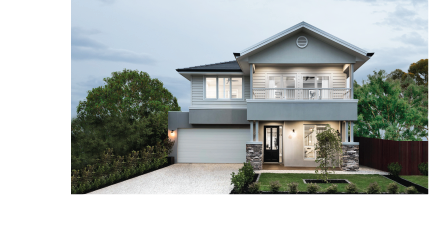
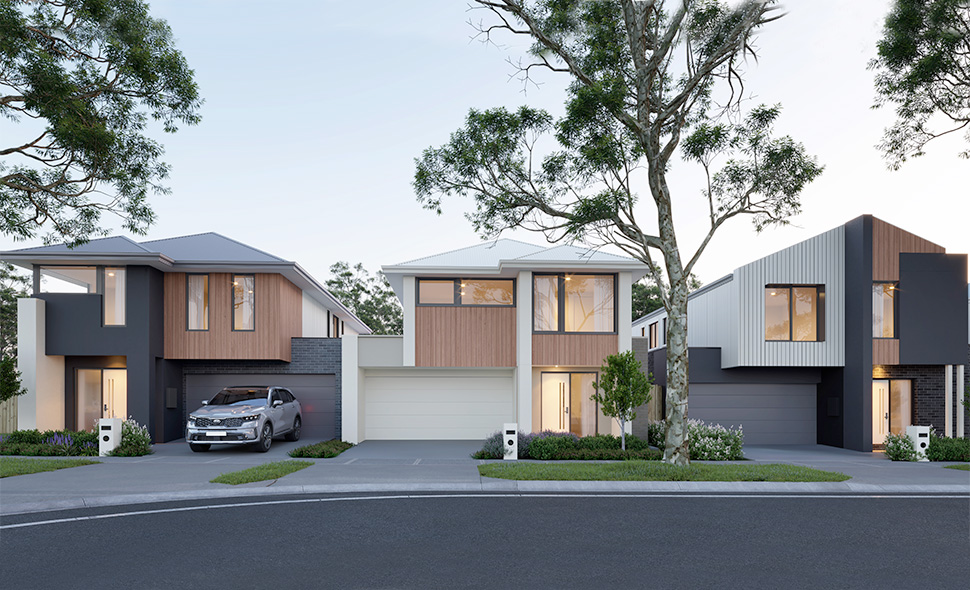
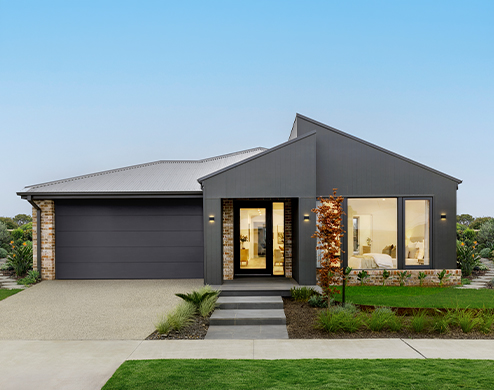
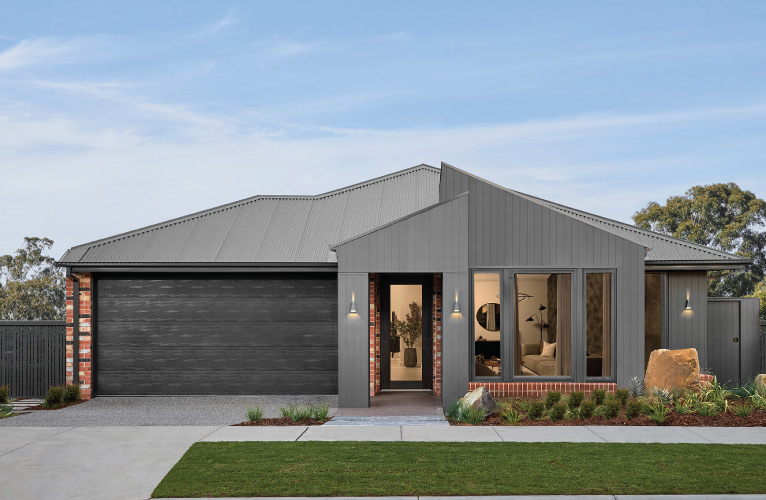
If you’re building a new home you might hear the word ‘façade’ and wondering what this French sounding word means. Pronounced ‘fa’saad’, put simply, it means the appearance of the front of the home.
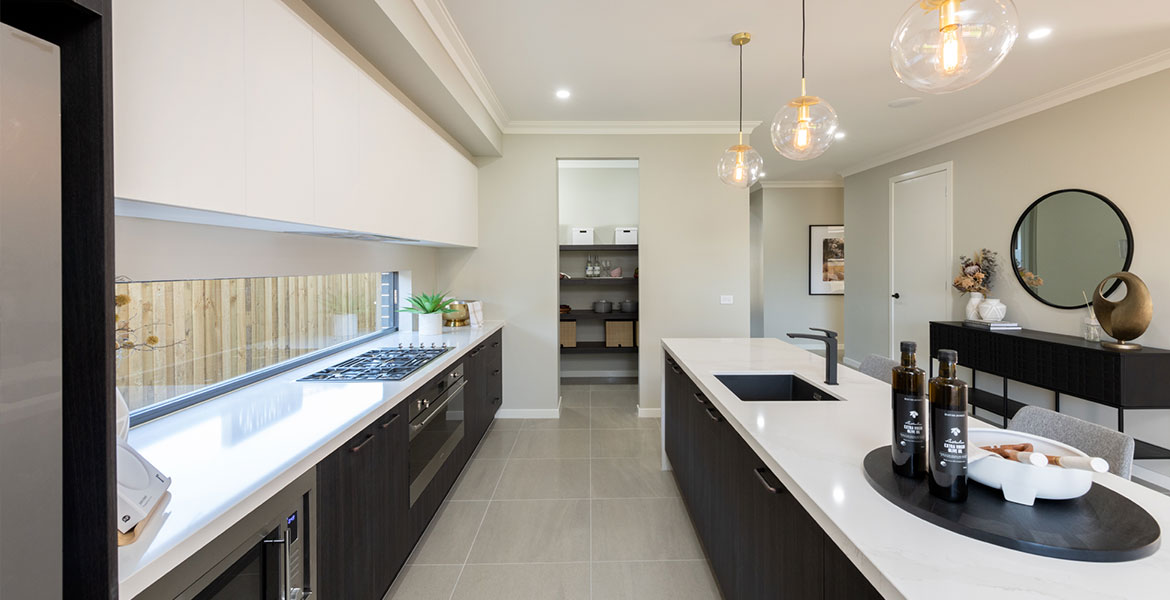
A kitchen with a butler’s pantry is like a small kitchen within your kitchen. It is a separate area that will usually contain some elements of kitchen functionality too. It may have appliances housed, an additional sink and provide a space to hide all the dishes and mess while the kitchen is used for the entertaining hub.
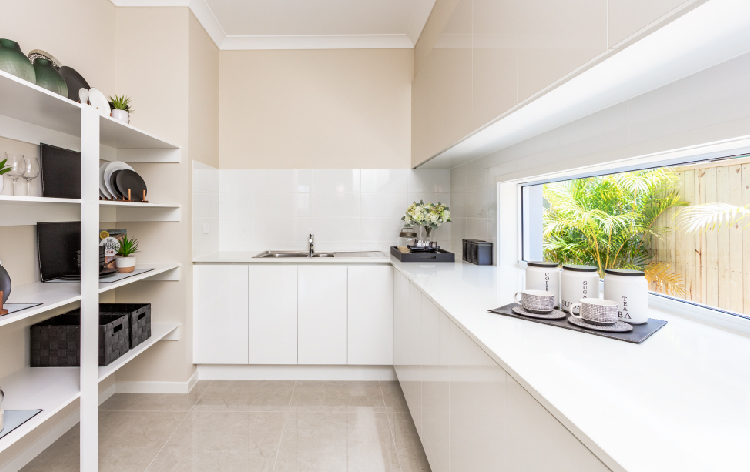
A walk-in pantry is a storage area in your kitchen with shelving generally for your food or smaller appliances, whereas the butler’s pantry (Also known as butlers kitchen) is more like a small room where you can install the larger appliances and have a workable area and a sink to keep the kitchen free of clutter.
A free-standing bath is a bath that has all four sides exposed. This enables the bath to be placed in anywhere in the bathroom as opposed to an alcove bath that is surrounded by one, two or three walls. They usually sit directly on the floor or are mounted on feet and are not fixed to the floor.

A house and land package is where a block of land and the construction of a home is one process but two separate contracts between the land developer and your builder. Essentially you are purchasing a block of land from a land developer and at the same time selecting a builder for home design and build service.
Builders like us work with their land developer partners to secure and tailor affordable house and land packages in prime locations.
When viewing a house and land package it will be of a certain home design that fits on the specific block. However, if you see a house and land package but are not sold on the design, just ask us as we have many other suitable home design options to fit our customers lifestyle, budget, and needs. This also works the other way, if you love the home design but are wanting to live at another location, we can explore other areas/blocks that suit where you want to live and build an exclusive package for you. If you’re thinking about buying house and land packages, look no further than Burbank.
House and land packages Melbourne and Victoria
House and land packages Queensland
House and land packages Sydney and New South Wales
House and land packages Canberra and ACT
House and land packages Adelaide and South Australia
‘Knock Down Rebuild’ or KDR is a term used in the Building Industry when referring to an existing home being demolished to allow for a new home to be built on the same block of land.
Burbank do not carry out demolition work. This is a specialist field, whereby a Demolition Permit needs to be obtained for and issued before any part of the existing structure can be removed. It is the Owner's responsibility and at the Owner's expense to engage a contractor to commence this process. The demolition generally would not take place till after Burbank has been issued with a preliminary ‘pre-demolition’ Building Permit, which is subject to the demolition taking place.
Knock Down and Rebuild Melbourne and Victoria
Knock Down and Rebuild in Brisbane, Gold Coast, Sunshine Coast and Queensland
Knock Down and Rebuild in Caberra and ACT
Knock Down and Rebuild Sydney and NSW
Knock Down and Rebuild Adelaide South Australia
Traditionally we are known for building new homes however we do sell Burbank display homes that are already built which is often a great solution if you are looking for a ready built home. To see what we have on offer head here.
House and land packages are not already built. If choosing to purchase a house and land package the process will involve you building a new home with the chosen builder offering the package.
If you are looking for houses already built, check out our Display homes for sale page.
In certain parts of Australia, securing a block of land to call your own is not that easy. There are hefty delays on land titling in some regions, which means you may purchase the land, but it may not be ready to be built on for another 18 months. In terms of buying land, it’s a good idea to do your research and shortlist the suburbs you can see yourself living in, while also taking into account your budget and the affordability of the desired regions. Then, visiting land sales offices in estates and signing up to receive updates, all while keeping a keen eye on property websites is a great way to remain in the loop with the prices and locations of developing land.
Strolling through displays and getting a feel for the type of home you like (and styling) is a fabulous way of ensuring the design you select is perfect for your lifestyle. We have many homes on the ground to give you a feel for the quality and design of our homes.
Traditionally we are known for building new homes however we do sell Burbank display homes that are already built which is often a great solution if you are looking for a ready built home. To see what we have on offer head here.
House and land packages are not already built. If choosing to purchase a house and land package the process will involve you building a new home with the chosen builder offering the package.
If you are looking for houses already built, check out our Display homes for sale page.
This is completely dependent on your in-comings and outgoings. Deposits are typically 10-20% of the cost of your selected home, so you’ll need roughly that, plus the ability to ‘service the loan’ (the ability to pay off your mortgage at a steady rate through a full-time job etc.).
To find out more about your financial position or to develop a savings plan, give the team at Livi Lending a bell on 1300 367 721, or speak to your preferred bank or broker as soon as you can.
Townhouses are a style of multi-floor home that share one or two walls with adjacent homes, but they have their own entrances. We have a partner company Burbank Urban that offers this type of home solution as well as apartments.
A duplex is a dual occupancy home; a combination of two homes in one where each home shares a common wall.
Find out more in our blog – link below.
PSI stands for Property Service Information. This is specific to your property and sets out any restrictions to services, infrastructure and connections that may affect the design, construction or development of your property. This is obtained through the local council and relevant water authority and will provide information that will assist in confirming any special requirements for your property.
In other words, the PSI is the technical “services map” of the entire property, which allows builders, designers and developers to understand what services are already available and what additional services need to be connected before or during construction.
Finance approval is the stage in the home‑building or home‑buying process where your lender formally confirms that they will provide you with the loan you’ve applied for.
Before a builder can proceed to construction, they require confirmation that you have the capacity to pay the full Contract Price and all variations.
If you are funding the construction of your new home without the assistance of a financier (i.e. bank, lender or financial institution), you will be required to complete a self-funded declaration form and provide a bank statement in the name of the owner(s) (as per contract) showing that you (being the owner) have the full Contract Price (including the cost of all variations) available in your account(s) prior to referral to construction.
If you are obtaining a loan, written confirmation (in the form of a letter) is required from your financier that you have unconditional approval for the full Contract Price (including the cost of all variations) and that the funds are ready for immediate drawdown on your approved loan.
If there is any shortfall between the loan and the full Contract Price (including all variations), you must provide us with a bank statement in the name of the owner(s) (as per the contract) showing that you (being the owner) have the remaining sufficient funds available.
If you have been approved for a First Homeowner’s Grant, you must provide evidence of your approval, such as a letter from your financier confirming your eligibility and the amount you are eligible for.
This is when a lender formally advises how much you can borrow. Once you have this you can start looking for your home and land. We highly recommend going through a mortgage broker to support you, every step of the way through this process to;
- ensure you are getting the best deal on your home loan
- save time and hassle, they’ll chase up the lenders/banks for a status on your pre-approval and the required documents
At Burbank we have in-house mortgage brokers from our finance partner Livi Lending that can support you. If you are in Victoria, NSW, or Queensland you will be able to apply for their services. Find out more here.
How much you can borrow based on your current financial status. Head here to use our online borrowing power calculator for an estimate today.
The ‘Price Freeze’ only applies to deposits for the construction of homes under an “off-the-plan” / “house and land package” arrangement where the land has not yet been officially registered or subdivided (i.e. “titled”) and settlement has not yet occurred.
We are cognisant that the official registration date for the land may change. This is why Burbank offers a ‘Price Freeze’ for 12 months’ from the date of your initial deposit.
Subject to the terms and conditions in your sales documentation, if your land is registered within 12 months from your initial deposit, no further charges are applicable.
If your land title is issued outside of the 12 months from your initial deposit, a price review will take place as per your New Home Registration and the Terms and Condition on your New Home Estimate, New Home Proposal and Final Tender Documents.
The 12-month price freeze commences from your initial deposit date until site start* based on:
1) The registration of the title or,
2) Demolition works being completed (including receipts of Asbestos Clearance Certificate) or,
3) Issuing of planning permits (being receipt of endorsed plans)
The ‘Price Freeze’ only applies to deposits for the construction of homes under an “off-the-plan” / “house and land package” arrangement where the land has not yet been officially registered or subdivided (i.e. “titled”) and settlement has not yet occurred.
We are cognisant that the official registration date for the land may change. This is why Burbank offers a ‘Price Freeze’ for 12 months’ from the date of your initial deposit.
Subject to the terms and conditions in your sales documentation, if your land is registered within 12 months from your initial deposit, no further charges are applicable.
If your land title is issued outside of the 12 months from your initial deposit, a price review will take place as per your New Home Registration and the Terms and Condition on your New Home Estimate, New Home Proposal and Final Tender Documents.
The 12-month price freeze commences from your initial deposit date until site start* based on:
1) The registration of the title or,
2) Demolition works being completed (including receipts of Asbestos Clearance Certificate) or,
3) Issuing of planning permits (being receipt of endorsed plans)
Stamp Duty is a government tax you pay when you buy property or land. It is charged by each state and territory across Australia, and the amount depends on things like the property’s value, whether you are a first home buyer, and whether it will be your primary residence. It is one of the major upfront costs you will need to budget for when purchasing a new home.
If you purchase an established home, you will be charged Stamp Duty on both the land and the house. However, if you purchase a vacant block of land, you will only need to pay Stamp Duty for the cost of the land. There will not be any Stamp Duty payable if no land transfer is taking place (i.e. if you are building on an established block of land).
This content is provided for general information only and does not constitute financial or legal advice. You should seek independent professional advice tailored to your specific circumstances.
Costs which arise from placing a home onto your land, including service connection costs. These include levelling of the building area, the importation or exportation of fill as required, connection to sewer and storm water, removal of trees, piering under the slab, connection to power etc
All Progress Payment are due and payable within 7 days of the invoice date. You will need to forward a copy to your lender for prompt payment. Your lender may have provided you with a form to supply along with the progress claim, if you are unsure, contact your lender. Burbank's bank account details are nominated at the bottom of the invoice for your convenience. Do not forget to include either Your Name or Our Reference or Invoice Number on your EFT.
A Community Infrastructure Levy (CIL)/ Council Contribution fee helps cover the cost of infrastructure in new communities including outdoor recreation areas, community centres and libraries and any other infrastructure required for the new to the development. Development Contribution Plans are part of the Council Planning Scheme, and these plans outline the infrastructure to be funded by the Community Infrastructure Levy in various areas.
The land developer may enter into an agreement with the Council to pay for the Community Infrastructure Levy upfront, including the cost in the land contract, however there are many new estates where the developer has chosen not to pay upfront, therefore the landowner will be required to pay the Community Infrastructure Levy prior to the issuing of a building permit. You can contact the local council to check if a Community Infrastructure Levy is payable on your property. Burbank will require a copy of the payment receipt to submit as part of your Building Permit application.
When borrowing more than 80% of a property’s value, it is generally a condition of the loan that the borrower pays Lenders' Mortgage Insurance (LMI). It is insurance that protects the lender, not you. It’s usually a one-off payment made required at the time of loan settlement. It’s insurance against the risk of not recovering the loan balance if you (the borrower) are unable to meet your loan payments and the property is sold for less than the outstanding loan balance.
Some quick facts about LMI:
• LMI is a type of insurance you can expect to pay if you borrow more than 80% of your home’s value.
• LMI protects the lender – not the borrower.
• You don’t need to arrange LMI yourself – your lender will sort it for you.
• It’s possible to save on LMI by saving a bigger deposit or if you are eligible for certain government grants or schemes.
A Building Permit is an official approval issued by your local council or authority (such as a private Registered Building Surveyor/ Certifier) appointed by Burbank to carry out construction, renovation or demolition works on a property. The Building Permit is a document which confirms that the design of your proposed building works (i.e. construction plans and engineering plans) complies with the national building codes, relevant standards, and building regulations. It must be granted before the construction of your new home commences.
A statement specifying a particular use or development may proceed on a specific piece of land.
Planning Permits is approval issued via your local council giving permission for your development to proceed. Not all properties require a Planning Permit. Planning requirements will be listed on your property information as issued by your Local Council and may also be listed on your Land Title. If a Planning Permit is required, it must be obtained before a Building Permit can be issued. A Planning Permit does not remove the need to obtain a Building Permit. Some aspects of a Planning Permit may overrule building regulations; however, it could also place addition conditions that must be met.
The requirement of a Planning Permits will increase scheduled works as each local council has different approval time frames. The requirement of a Planning permit will add a minimum of 30 to 90 days to assess the application and will affect the scheduled works and incur additional costs.
When constructing a new home, the local councils will require you to take out an Asset Protection Permit. This involves the local council Engineering Department carrying out an inspection of the current condition of the footpath, curb, and channel along with your crossover. Any subsequent damage to the council’s assets will need to be repaired after completion of the works. The permit and the associated bond are your responsibility (being the Owner) and will be at your expense. Copies of the Asset Protection Permit must be supplied to Burbank prior to commencement of construction.
This is one of the final documents issued when the construction of a home is completed. It signifies that the Building Surveyor/ Certifier has received compliance certificates from all registered subcontractors / suppliers / trades who have carried out building works on your home and that the Final Inspection has been carried out by the Building Surveyor/ Certifier who confirms that the building works are fit for domestic occupation and comply with the national building codes, relevant standards, and building regulations .
Developer Approval of your building plans is applied for by your builder on your behalf. The developer will confirm that your new home complies with all estate requirements.
If you have an easement running within your property, there are additional building regulations that come into effect. The easement can service your sewer and/or stormwater connection. This can be owned by the water authority, the council or both.
If we do not comply with the regulations a 'build over easement' approval may be required. Depending on who owns the easement, will depend on who we will need approval from. This varies from home to home and site to site, the general timeframe for a build over easement approval can take additional 4-6 weeks and is at an additional cost to the owner.
This is an official record of who owns the land and is transferred to the owner upon full payment for the block.
Your proposed new home is placed onto your block of land. Your new home consultant will site your home to scale, taking care to comply with the regulatory requirements, including building envelopes and land developer guidelines.
The amount of slope on your block, determined by a series of contour lines shown on a feature survey.
This is the section of concrete connecting your driveway to the street. It is the access point between your driveway and the street and typically includes the part that crosses the footpath, kerb, and nature strip which allows vehicles to safely enter and exit your property from the street.
This is the section of concrete connecting your driveway to the street. It is the access point between your driveway and the street and typically includes the part that crosses the footpath, kerb, and nature strip which allows vehicles to safely enter and exit your property from the street.
A Soil Test is an assessment carried out by a geotechnical engineer on your block of land to understand the soil classification and relevant conditions before building. It involves drilling a series of holes and analysing the soil type for reactivity, and how much the ground is likely to move or shift if the moisture content changes. The results determine the site classification, which is used by the structural engineer to design an appropriate foundation system for your home, ensuring it is structurally sound and compliant with national building codes, relevant standards, and building regulations.
This is a Geotechnical Engineer's report identifying your soil classification which is used by your structural engineer to design your slab.
This is determined by the engineer from assessment of the soil test results. The classes include:
S - Slightly reactive
M - Moderately reactive
H - Highly reactive
E - Extremely reactive
P - Problem sites
Classes S, M, H and E generally refer to sites with clay soils and how reactive the soil is to changes in moisture content which can impact on the footings/slab.
A ‘Cooling-Off period’ occurs within 3 business days from the date of contract signing allowing the potential buyer to withdraw from the deal. A cooling-off period of 5 business days applies to building contracts over $5000.
A ‘Cooling-Off period’ commences at midnight on the first business day following the signing of a contract and issuing of Form 1 to the purchaser. The cooling-off period lasts for two clear business days and allows buyers to withdraw from the deal. A cooling-off period of 5 business days applies to building contracts over $5000.
The method used to provide a level building area on a sloping site. Also known as earthmoving, it is a technique to help level a block of land prior to construction by using material excavated from higher ground to create platform to build your home on.
A designated area on your land within which all building work must be contained. A building envelope is set out by Council guidelines and will be shown on the Plan of Subdivision attached to the Vendor Statement.
Restrictions placed on your land which set the requirements for the size of your new home, including the style or type of materials used. These will be outlined in Section 32 Vendor Statement. Protecting your investment, Covenants regulate the standard of homes in an estate. Most new estates also have specific Land Developer Guidelines, which the buyer must comply with. Your builder can assist you with this when selecting your new home.
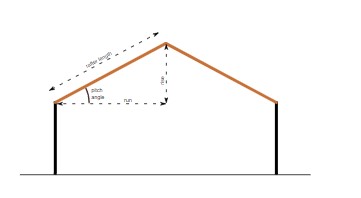
The angle of a sloping roof, usually expressed in degrees, e.g., 22-degree pitch.
These are support mechanisms usually made from poured concrete and supporting steel under the slab of a home. Engineers determine if these are required in the design of your footings.
At Burbank, we stand by our quality and have a 30-year structural guarantee on every home we build. We also have independent inspectors that come in during stages of the build as part of our quality assurance processes. For more information on our home guarantees head to the below links.
Burbank’s Home Guarantees VIC, NSW, ACT, QLD, SA.
An easement is an interest attached to a parcel of land that gives a statutory authority a right to use a part of that land for a specified purpose.
A section of land registered on the Certificate of Title document provides Council and/or the utility providers the right of access to your property. Often pipes such as sewer or storm water are in the easement and are essential to have arranged for your new home. You may not be able to build a house over an easement without consent.
The minimum permissible distance from the front, side, and rear boundaries of the block to your new home.
The kerb opening to your lot installed by the Council to allow vehicle access to the property. It is important to check the location of your layback when siting your new home.
A sewer tie is the point where your drainage system is connected to the main sewer line that is owned by the water authority which transports sewerage away from the property. It is critical that the sewer tie is clear of your foundations, pool, retaining walls or any other structure of your home. If required, re-locating a sewer tie can be a significant undertaking at your expense.
A Practical Completion Inspection (PCI) is an onsite appointment with your Building Site Manager once your home is completed in accordance with Contractual documentation.
The process involves having you onsite with your Site Manager to inspect all works that have taken place. You will have a full working demonstration of the home carried out by your Site Manager and will be able discuss any minor items that may require attention prior to settlement of your home.
The preliminary quotation provided by Burbank to you with all the terms and conditions of the preliminary agreement before any selections are made and any modifications have been requested.
An updated quotation provided by Burbank after the New Home Estimate has been accepted with revised costings provided by Burbank’s Sales Estimating Team for any modifications that may have been requested (if any).
A Final Tender is a final quotation provided by Burbank after the New Home Proposal which includes any selections such as tiles, colours, electrical and heating and cooling upgrades (if any) and any other costings as directed by other authorities. This forms your contract value and lists all specifications and inclusions.
Each state will vary, when building a new home, we are required to comply with building regulations which is stipulated by the relevant authority in your state.
This sets out the requirements for things such as:
• Siting - setbacks requirements from front and side boundaries building height above natural round level requirements overlooking/overshadowing requirements.
• Bushfire requirements
• Energy Rating requirements
• and many more compliance requirements as stipulated in the National Construction Code (NCC).
A Bushfire Attack Level (BAL) is a rating that measures how much potential bushfire risk your property may be exposed to. It is determined through a formal assessment that looks at factors such as vegetation type, distance to bushland, slope of the land, proximity to other buildings and likely fire behaviour.
The BAL indicates how at risk your property is from a bushfire and what level of protection must be built into the design to prevent a bushfire.
All properties must have an underground service location point for electricity connection. This is referred to as an electrical pit or alternatively, a service / utility pit. This usually contains electrical cables and connections for the builder to connect your property to the electricity network and allows technicians to service those connections. Established areas may only have overhead power supply.
The Queensland Civil and Administrative Tribunal (QCAT) is a statutory organisation responsible for reviewing administrative law decisions of some Government of Queensland departments and agencies, and also adjudicating some civil law disputes.
The Queensland Development Code - A Government Code which sets out the development standards for housing, land subdivisions and town planning in Queensland.
Reverse Building is a technique in the building industry where traditional construction sequences are reversed. For example, plastering may take place before the completion of the external cladding i.e., brickwork. This is a common practice in the building industry and, provided the wall wrap and roof cover are completed, poses no concern to the structure of the dwelling or materials used. The purpose of reverse building is to continue with scheduled works on site as to minimise delays.
The code simplifies planning approvals for some common forms of residential development. The code sets out performance criteria related to physical aspects of the development, such as location, height, boundary setbacks and site coverage. These criteria allow councils and private certifiers to quickly process applications that comply with the code.
The Housing Industry Association (HIA) is a low-cost forum facilitating dispute hearings regarding consumer matters, including domestic building works, where both parties are unable to reach agreement.
An Established Area Surcharge is a fee that builders or developers may charge when you build in an already developed suburb rather than in a new estate or greenfield area.
These additional costs will be calculated and presented in detail to you in your New Home Proposal. They may include items such as multiple smaller deliveries, specific crane hire and protection requirements due to existing neighbouring conditions. They can also account for restricted access caused by narrow and busy streets, traffic management requirements and overhead powerlines.
In simple terms, it is a surcharge that covers the extra work, planning and site constraints involved in constructing a home in an established, built‑up area rather than on an empty block in a new development area.
This is a formal notice given to a neighbour when proposed building works may affect their property and may be required only when you are building a home in an established area. If you are required to issue a Protection Works Notice, your private Registered Building Surveyor will set it out in your Building Permit conditions. It will generally only be required if your new home is to be constructed within a certain distance of an adjoining property including but not limited to, the neighbour’s structure, retaining wall, landscaping, and driveways etc.
These existing features need to be protected during the construction of your home and we need to seek the approval of the neighbour before any works can commence.
This can be a very time-consuming process and will add significant time to the scheduled works as well as additional costs.
A document prepared by an estate agent or solicitor outlining particulars of the sale of a property. It clarifies details such as price, settlement, finance, and any special conditions.
A Re‑establishment survey is a type of land survey carried out by a licensed land surveyor to accurately identify and mark the true legal boundaries of a property. The survey will determine your exact title boundaries of the lot and replace any missing boundary pegs. In new estates prior to land settlement, it is the Developer's responsibility to ensure that all boundary pegs are in place.
Please ensure that your boundary pegs are in place prior to land settlement, as replacing or reinstating them afterwards may result in additional costs (at your expense).
A Variation Order is a formal document used by Burbank to modify any changes to the building contract (i.e. to the design, materials, or scope of works) after it has been signed. In other words, it is an official agreement by the parties to change something in your building contract after it has already commenced.
A document between you and your builder which includes details of start and completion dates, new home specifications, contract price and progress payments.
Your Building Contract will be issued shortly after you have finalised your colour/electrical/heating/cooling upgrades. A copy of your contract will be issued to you and signing of the contract is required within 7 days of issue. Your Balance of 5% deposit is also required at the Contract Signing appointment.
Also known as a Section 32, this is attached to the Contract of Sale and provides the buyer with information about the sale of the property. As it is important to check this document thoroughly, it is a good idea to have your solicitor peruse it before an offer to a Vendor is signed.
The best way to find out whether you need a Planning Permit is to contact your Local Council. Generally, this will be required when subdividing land or demolishing a house. Depending on the Council, you may require one to build a new home.
A Feature Survey is a detailed survey of your block of land that maps all the physical features on and around the property. This is a site-specific analysis supplied to Burbank to determine the distinctive attributes of the property such as levels/contours, trees, AHD/flood levels, adjoining lot information, identifying service locations etc. This is usually completed in conjunction with the Soil Report, which we obtain as part of our preliminary works process.
A licensed surveyor will visit the site and prepare a Contour Survey by locating features particular to the site, including fences, trees, pits, adjacent buildings, ground level and contours. The survey will also determine the site fall/slope of the land. This is displayed as a series of contour lines at different levels. Your builder orders this information.
A Building Contract is a legally binding agreement between you and your builder that sets out all the terms and conditions for the construction of your home, including but not limited to, what will be constructed, how it will be constructed, and what it will cost. It includes key details such as the build start and completion dates, all the specifications, the contract price and when the progress payments are due.
Once a copy of your Building Contract is issued to you, signing of the contract will be required within 7- 10 days of the date of issue.
If you need to seek legal advice, please ensure that you do so before you are required to sign the Building Contract.
Base Stage is the first major construction milestone in a new home build.
It means your concrete slab has been poured and your building foundation is complete.

The Frame Stage is another major construction milestone in a new home build where the timber framing structure to all walls and roof are completed.
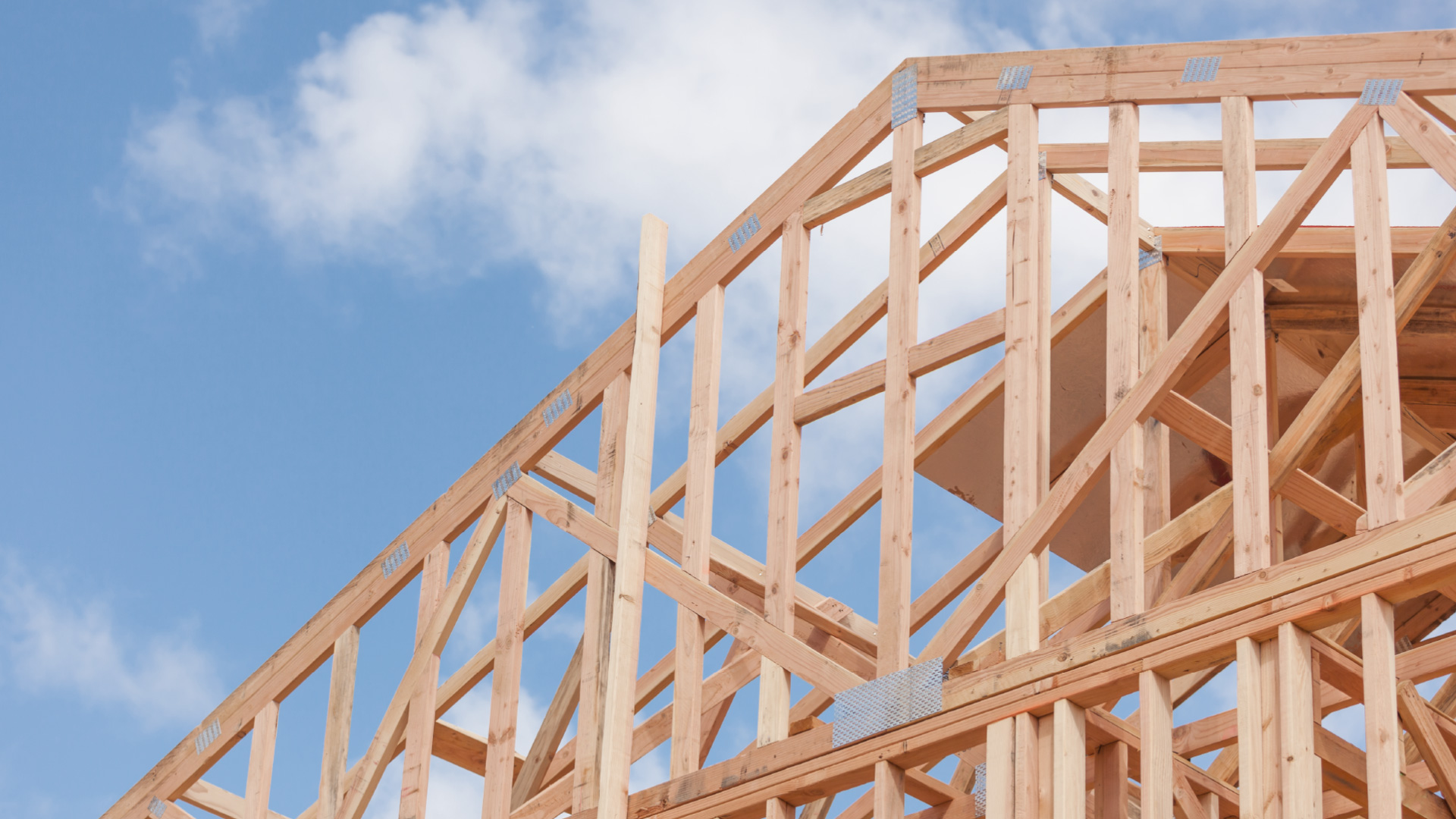
The Lock Up Stage is another major construction milestone in a new home build where your external wall cladding, roof covering, external doors and windows are installed (even if those doors or windows are only temporary).
The Fixing Stage is another major construction milestone in a new home build where all the plaster to walls and ceilings and cornices are installed (i.e. internal cladding), and architraves, skirtings, hinged doors, cabinets, cupboard.

Final Stage means all internal and external painting, tiling, plumbing and electrical fit offs, termite treatment, garage door installation, all flooring covering, gas meter installation, hot water service and all appliances are all installed and if applicable: concrete paving, clothesline, curtains, blinds, and letterbox.
The Building Surveyor also completes a final inspection of the property and, upon receipt of all trade compliance certificates, will issue the Occupancy Permit. Once your home is completed final invoice is issued once Practical Completion Inspection is complete.
You are more than welcome to engage an independent inspection by an independent consultant at major milestones during your build. However, please note that engaging an independent consultant for inspections will come at an additional cost to your appointment of a qualified, licensed and independent Building Surveyor. The owner will need to complete Private Inspector form prior to construction commencing and advise their Customer Care Coordinator they are appointing one.
Your appointed Building Surveyor will be carrying out inspections in accordance with the current standard and Building Regulations, ensuring that compliance certificates have been received from all relevant licensed and regulated suppliers and trades before issuing an Occupancy Permit at the completion of the final inspection.
Please contact your Burbank representative for more information regarding Burbank's policies and procedures concerning the engagement of an independent consultant.
We completely understand the excitement and eagerness to inspect the progress of construction for your home. As your property will be a construction site, it is essential that you do not access the site unless a Burbank’s representative is present. We want to ensure that you and our trades’ safety comes first and foremost. To arrange a site visit, you will need to make the request directly with your Burbank representative (often your Site Manager), with at least 48 hours’ notice. Confirmation of an onsite appointment is subject to your Site Manager’s availability and WHS conditions on site and works scheduled. Site meetings are held during business hours between Monday to Friday. We allow one on-site visit per stage unless otherwise agreed.
A Settlement Appointment, also referred to as “Hand Over”, is the final step when the licence to access the property is returned from Burbank to you. During this appointment, you will need to ensure that all legal documents are checked and finalised with your Burbank representative before you receive the keys to your new home.
Before this appointment you will need to:
If you are paying the Contract Price, you will need to arrange for the payment of the final payment.
If your financier is paying the Contract Price, you will need to arrange for the payment of the final payment with your financier. This can be made via bank cheque, or EFT (note: it must be in Burbank’s accounts prior to settlement appointment). Please double check with the financier and their policies on what is required and ensure that everything is completed to ensure payment of the final payment is made before arranging the Settlement Appointment.
Arrange any necessary insurances on your home.
Your final tender will set out what is standard and what you have upgraded prior to your Edge studio appointment.
All service charges and bills (i.e. usage charges) are your responsibility to pay during the construction period. Burbank will also arrange and pay for the connection and installation of, Water, Sewer, Storm Water, Electricity and Gas (if applicable) to your property, which are estimated in your Building Contract.
Throughout your new home build, there will be progress payments issued at various milestones of your build.
If a financier is lending you money for the works, you will need to forward a copy to your lender as soon as possible to arrange for the payment to be made. Each financier will have different processes for you to approve payments of the construction loan. Your financier may have provided you with a form to supply along with each progress claim. If you are unsure of the process, please ensure that you check with your financier before construction commences to better understand the process to avoid any late payments.
Burbank's bank account details will be set out at the bottom of each invoice. When processing the payment, please ensure to include either Your Name, Our job number or Invoice Number on your EFT.
Demolition is commonly abbreviated to ‘Demo’ in the building Industry and refers to the knocking down of the existing residence on the land you wish to build your new home. This usually requires a demolition building permit and involves the use of heavy machinery to knock down the entire building and to arrange for the removal of all rubble and debris from the site.
1. Establishing vacancy for existing property
Ensure you are issuing the tenant with the correct vacancy notices.
2. Abolishing all existing services by licensed trades and with the correct approvals from the respective Authorities.
This includes electricity, gas, sewer, and stormwater. Existing water tapping may remain depending on condition and compliance.
3. Issuing of all required permits, including Demolition Permit, protection notices, OH & S compliances, and local council requirements
Demolition works, whereby the existing dwelling and all existing sheds, garages, paving, and landscaping are removed from the property including all footings. It is critical that all rubble and debris is removed from the site, and nothing is left buried, as this will result in extra site costs and delays when the Builder commences construction.
The demolition process can take up to 12 weeks. Upon completion of all demolition works in Burbank can now determine your Site Costs, as accurate levels / contours and soil classification can be obtained for your property. These are required to determine the appropriate slab design for your new home.
This is a survey requested by Burbank on your behalf to record accurate data of the contours and the slope of your land (i.e. the actual condition of the site) after the demolition has been carried out. It will also identify all key elements specific to your block, which are critical in determining the siting of your new home, such as the location of existing power poles, cross over, trees, service locations and neighbouring structures.
These are the computation, designs and details received from a Structural /Civil Engineer specifically calculated based on the results of the Feature Survey, Soil Report, and the design of the home you have selected, also taking into consideration where your home is positioned on your block of land. This is one of the many documents required to obtain a Building Permit.
The reference to ‘Post Demo’ refers to the fact the survey is conducted after the demolition works have taken place.
The Edge Selection Studio operates on an appointment only basis, but we of course understand that sometimes unexpected things can happen and plans may change. If you cannot attend your scheduled appointment, please notify your Burbank Edge Selection Studio Representative at least three business days’ before your appointment to avoid a late cancellation fee.
As part of our service, when you build with Burbank you will receive a one-on-one appointment with an Interior Designer to master your style and select all the products and finishes for your new home. Your selection appointment is an all-day commitment.
Ahead of your appointment it is best to come prepared and understand the type of home styling that speaks to you. We encourage you to complete pre- selections via constructive, visit our display homes, browse Pinterest and our social media channels, take photos, even create a mood board with all things that inspire you in the way of design for your new home. You will have an expert Interior Designer to help you master the finishes and style of your home in your appointment, however, being prepared is encouraged.
Unfortunately, we are unable to change your promotion tier during the Edge Studio appointment. We encourage you to discuss your requirements with your New Home Consultant prior to your edge studio appointment so that a suitable promotional tier can be selected for your needs.
Your Edge Selection Studio Appointment is dedicated to finalising the colour selections and electrical details for your new home. Structural changes cannot be made during this session. This includes adjustments such as altering door sizes or modifying the overall layout of your kitchen.
Yes, where possible, your Interior Designer will inform you of any additional costs associated with your preferred selections and provide alternatives (where needed) to ensure your home selections meet your budget.
Please note that we may not be able to provide all pricing to you during your appointment. Once you have completed your selections with your Interior Designer, this is then collated and priced by Burbank’s Estimating team who will then provide you with accurate costings for all your selections.
As many as you like! Weekend tours are by appointment only and you can book a weekend Edge Studio tour via our website. We also offer browsing sessions (by appointment) from 1-5pm every Saturday and Sunday. The weekend tours are not available in NSW.
Your Interior Designer will finalise your selections and will obtain pricing from Burbank’s Estimating team, who will prepare accurate costings for everything you’ve chosen. Once this is complete, your Interior Designer will contact you to review and sign off on the final updates to your selections.
Yes, this appointment is your opportunity to review and finalise all colour and electrical selections so we can move confidently into the next exciting stage of your build.
It is important to come as prepared as you can so that the appointment runs smoothly and you can feel confident in your choices.
No, once your documentation has been signed at the Edge, your file is transferred back to your Customer Care Coordinator to continue with lodgements.
Let us know how we can help. Our new home consultants will be in touch with anything you need.

Burbank is proudly an Australian home building company developing homes since 1983, led by a passionate team.
As a family owned and operated business, it holds unwavering family values instilled in the heart of every home.
Where would you like to build?

Reset your Password
Hi

Alternatively you can call us now






.png)